Bedding Guide
Pillow Shams Explained: Closures, Texture, and Layering
A pillow sham may look like a finishing touch, but its opening, fabric, and construction shape how it sits on a pillow and works within a bed’s layers. Here’s what to compare before choosing one.
Pillows do practical work. They support the head and neck, and they are among the bedding items most likely to be handled every day. A sham adds another role: it gives a pillow a more considered place in the room, with fabric, texture, and pattern that can connect the bed’s other layers.
That decorative purpose does not make construction incidental. The opening determines how a pillow goes in and stays put. Binding can sharpen an edge or add contrast. A woven or stitched surface changes the way the sham feels in the hand and reads across the bed. Materials and care instructions matter, too, particularly when the sham is intended for regular use rather than occasional display.
Understanding those details makes it easier to distinguish a sham from a standard pillowcase and to choose a cover that fits both the pillow and the way the bed is used. The most successful choice is not necessarily the most elaborate. It is the one whose dimensions, closure, texture, and upkeep suit the rest of the bedding.
A sham is a layer, not just a pillow cover
A pillowcase is generally designed for the pillow used during sleep: it protects the pillow and provides a washable surface close to the sleeper. A sham is often used as a more decorative outer layer. It may coordinate with a duvet cover or coverlet, introduce a contrasting pattern, or add texture to a stack of pillows. The terms can overlap in retail descriptions, so the product’s construction and intended use are more informative than its name alone.
Some shams are made to be removed before sleeping, while others are comfortable enough to stay on the bed in everyday use. There is no single rule; fabric, finish, and personal preference decide. A softly washed cotton sham may feel relaxed and familiar, while a more structured or embellished design may be better suited to styling the bed and being taken off at night.
Look at the whole bedding arrangement before selecting one. Sheets create the close-contact layer, while a duvet cover, bed cover, or coverlet supplies a broader field of color and texture. Shams sit nearer the head of the bed and can either echo those larger layers or provide a measured point of difference. When every surface has an equally bold pattern, the bed can feel busy; when all the layers are plain, texture and construction can supply visual interest without adding another print.
Closures: the small detail that changes daily use
The closure is easy to overlook in a product description, but it affects how a sham is fitted, how neatly it holds a pillow, and what the finished edge looks like. Three common approaches are envelope openings, button closures, and zipper closures. Each has a different balance of simplicity, security, and appearance.
Envelope openings
An envelope closure uses an overlapping panel at the back or inside of the sham. The pillow slips through the opening and rests behind the fabric overlap. There are no small fasteners to close, and the outside can remain smooth and uninterrupted. This makes envelope shams straightforward to put on and remove for washing.
The overlap should be generous enough to keep the pillow contained. If the pillow is much fuller than the sham, it may push against the opening or create a crowded, uneven shape. Conversely, a very flat pillow may not fill the sham well, leaving the corners slack. Checking the finished dimensions and matching them to the pillow’s actual size—not only its label—can prevent both problems.
Buttons and other fasteners
Buttons can secure an opening while adding a visible detail. They may be placed at the back, along an edge, or within a flap, depending on the design. Natural-material buttons, such as coconut shell, can complement an organic cotton textile, but their presence also means there is another component to handle during laundering. Follow the maker’s care directions and fasten or protect the closure as instructed.
Buttons are not automatically more secure or more practical than an envelope. Their usefulness depends on their placement, spacing, and how easily they open and close. If the sham will be removed often, consider whether the fastening feels convenient enough for that routine. For a decorative arrangement changed less frequently, the closure may be a secondary concern.
Zippers and concealed openings
A zipper can give a neat, contained fit, particularly when it is concealed along a seam. It may help prevent a pillow from slipping out, though the zipper itself should not create a hard or uncomfortable edge where a sleeper rests. Check whether the zipper pull is covered or positioned away from the most-used surface. As with any closure, a well-fitted sham should not require forcing the pillow into place.
Texture begins with fabric and construction
Texture can come from the fiber, the weave, the finishing process, or a combination of all three. Smooth cotton percale, lustrous sateen, linen, and textured weaves each create a different effect. The choice is partly visual, but it also influences how a sham feels, drapes, and sits alongside the other bedding layers.
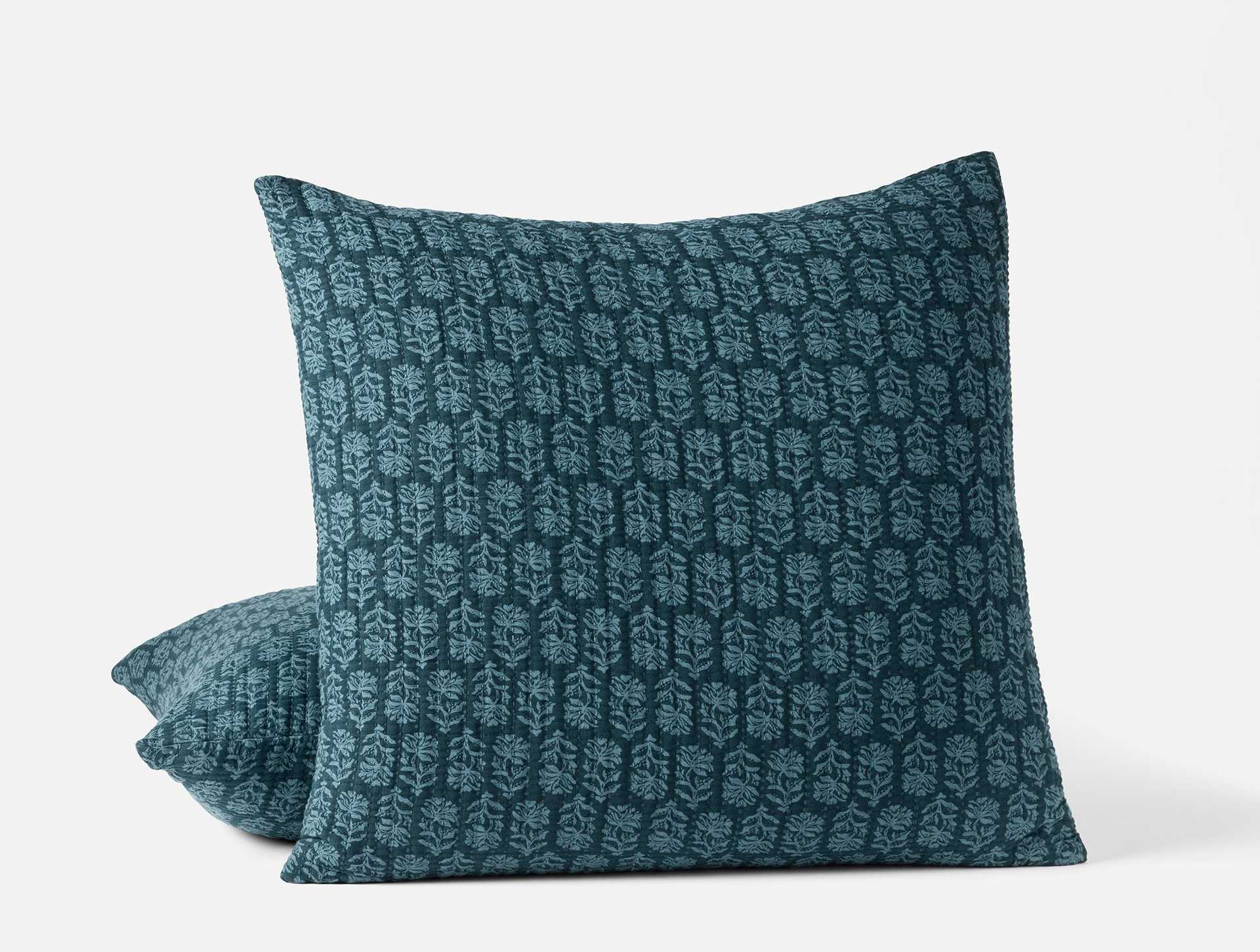
Matelassé is a woven textile construction associated with a raised, quilt-like surface. Its dimensional appearance can suggest stitching or quilting without necessarily being a conventional quilt filled with batting. In some matelassé shams, yarn fill contributes body while preserving a relatively breathable, pliant feel. Product descriptions differ, so read the construction details rather than assuming that every textured cover has the same internal structure.
Stonewashing or garment washing can soften a textile and give it a relaxed, lived-in appearance. Such finishes may be part of the design rather than a sign of wear. A gently rumpled surface can pair naturally with crisp sheets, or provide continuity with similarly relaxed bedding. Texture is most effective when it has room to register: one tactile coverlet or sham can often do more than several competing surfaces.
For example, the Mirada Organic Matelassé Sham is described as jacquard-woven from GOTS-certified organic cotton, with yarn-fill construction and a garment-washed finish. Its envelope closure offers a clean outer appearance, while the matelassé surface adds dimension. The product information also specifies cold, gentle-cycle washing and low tumble drying, details worth considering as part of the choice.
Choosing the right fabric for the role
Cotton is a familiar option for shams because it can be woven into many different weights and textures. The word alone, however, does not describe how a particular sham will feel. Fiber quality, yarn, weave, finish, and construction all contribute. A lightweight cotton cover and a substantial textured cotton sham may share a fiber but behave quite differently on the bed.
Linen has a distinct natural texture and may soften with use and laundering. It can introduce a relaxed, breathable-looking layer, though its characteristic creasing is part of its appearance. Blends and other fibers bring their own care and feel considerations. For any material, the label and product description are more reliable guides than broad assumptions about fiber.
Organic certification is another detail shoppers may encounter. A certification such as GOTS refers to defined standards for organic textiles and their processing; it is not a substitute for checking fit, comfort, or care. If certification matters to you, confirm exactly which product components and claims are covered in the product information. A well-chosen sham should work as a textile first and meet any sourcing preferences as well.
Think also about the bedding already in use. A densely textured sham can balance smooth sheets, while a plain sham can give patterned bedding a pause. A tonal palette does not have to mean identical surfaces: subtle variation in weave or finish can make a layered bed feel intentional without relying on strong contrasts.
Fit: compare the sham with the pillow
Size labels are a starting point, not a guarantee of fit. Pillow dimensions can vary, and a pillow’s fullness affects how it sits inside a cover. Before purchasing, compare the sham’s stated dimensions with the pillow, taking into account whether the pillow is firm and plump or soft and compressible. A close fit generally gives a tidier outline; a little ease can make insertion and removal simpler.
Pay attention to the sham’s shape as well as its measurements. A square decorative sham is designed to create a different profile from a standard bed pillow cover. Some decorative sizes may be called euro shams, while other shams are sized for conventional sleeping pillows. Confirm the dimensions rather than relying on the term alone.
- Measure the pillow. Use its full width and length, and consider how much it compresses when handled.
- Check the finished sham dimensions. A product’s listed size may refer to the cover rather than the pillow it is meant to fit.
- Account for construction. A thick, yarn-filled or textured sham may have a different feel and available space than a flat cover.
- Consider the closure. An envelope opening needs enough overlap to contain the pillow without strain.
If a sham is difficult to close or pulls sharply at the seams, the pillow may be too large or overfilled for it. If the pillow shifts into empty corners, the cover may be oversized or the insert may be too small. A balanced fit helps the sham look composed without flattening the pillow or stressing its seams.
Layering pillows with intention
There is no required number of pillows. The useful arrangement is one that suits the bed, leaves room for sleeping, and can be maintained without turning a nightly routine into a project. A few well-chosen shams can frame the bed and connect its colors; adding more is a matter of comfort and preference, not a rule of design.
Start with the pillows used for sleep, then decide whether decorative shams should sit behind them or in front. Larger pillows placed toward the headboard establish a backdrop; smaller pillows can add a focal point without hiding the sheets or coverlet. Keep the proportions appropriate to the mattress and headboard. A tall stack can overwhelm a low bed, while too many small cushions may make a broad bed look fragmented.
Repeat one element to create cohesion. That might be a color shared with the duvet cover, a texture repeated in a coverlet, or a quiet contrast against plain sheets. Repetition does not require a matched set: related tones and differing surfaces can feel more layered than identical pieces. A textured matelassé sham, for instance, can sit alongside a smoother cotton duvet cover while keeping the palette connected.
On an adjustable bed, consider how the arrangement behaves when the head or foot of the base moves. Pillows used for sleeping may need to remain accessible, while decorative pieces can be removed before changing positions. Avoid allowing a heavy or bulky arrangement to interfere with the bed’s movement or become awkward to manage.
Care is part of choosing
Shams are handled, exposed to dust and skin oils, and sometimes washed alongside sheets. Their upkeep can therefore influence whether a beautiful choice remains practical. Always follow the individual care label: fiber, finish, dye, closure, and construction can change the recommended routine.
For machine-washable cotton shams, instructions may call for cold water, a gentle cycle, similar colors, and low heat. These are not universal rules; they are examples of the kind of specific guidance to verify before washing. Remove items promptly if the label recommends it, and use an iron only when the care instructions allow. A sham with buttons or other trim may need particular attention.
Before laundering, close fasteners where advised and separate pieces that could snag delicate fabric. Avoid overloading the machine so bedding can move freely. Make sure the sham is fully dry before placing it back on the pillow. If a textile requires professional care, or the instructions are unclear, do not assume it can be treated like everyday sheets.
Care is also a reason to think about use. A sham intended to be removed nightly may benefit from a closure that makes that task simple. A decorative piece washed less often may allow more intricate detailing. In either case, a straightforward care routine supports the life and appearance of the textile.
A practical comparison checklist
When comparing pillow shams, product descriptions can be dense with terms. Translate them into a few concrete questions about fit, use, and upkeep:
- What pillow size is it designed for? Confirm the finished dimensions and compare them with your insert.
- How does it close? Decide whether an envelope, buttons, or a zipper best suits your routine and preferred appearance.
- What creates the surface texture? Look for details about weave, stitching, yarn fill, binding, or washing finish.
- What is the fiber content? Check the full material description, including backing or fill where provided.
- How should it be cleaned? Make sure the recommended care is manageable for the way you plan to use it.
- How will it layer? Consider the color, scale, and texture of the sheets, duvet cover, and coverlet already on the bed.
- Is the stated certification relevant to your priorities? Read the product’s specific certification information instead of inferring claims from a material name.
The finishing layer that earns its place
A sham can make a bed look finished, but its value lies in more than appearance. A well-matched size prevents sagging or strain. A suitable closure keeps the pillow contained and makes removal manageable. Fabric and construction determine texture, drape, and care. Together, those details decide whether a sham is merely decorative or genuinely useful in everyday bedding.
Choose with the whole bed in mind, but let practical needs set the boundaries. Measure the pillow, inspect the closure, read the material and care details, then consider how the texture will sit beside the sheets and larger bed covers. With those basics in view, a sham becomes a considered layer: subtle or expressive, smooth or tactile, but always suited to the way the bed is lived in.